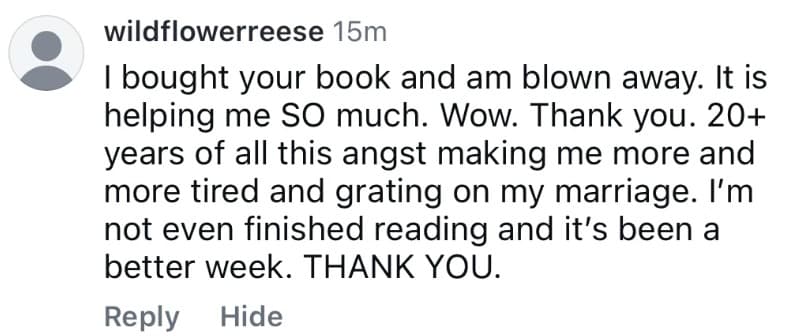
You tried being nicer. You tried talking. You tried setting boundaries.And it still hurts.
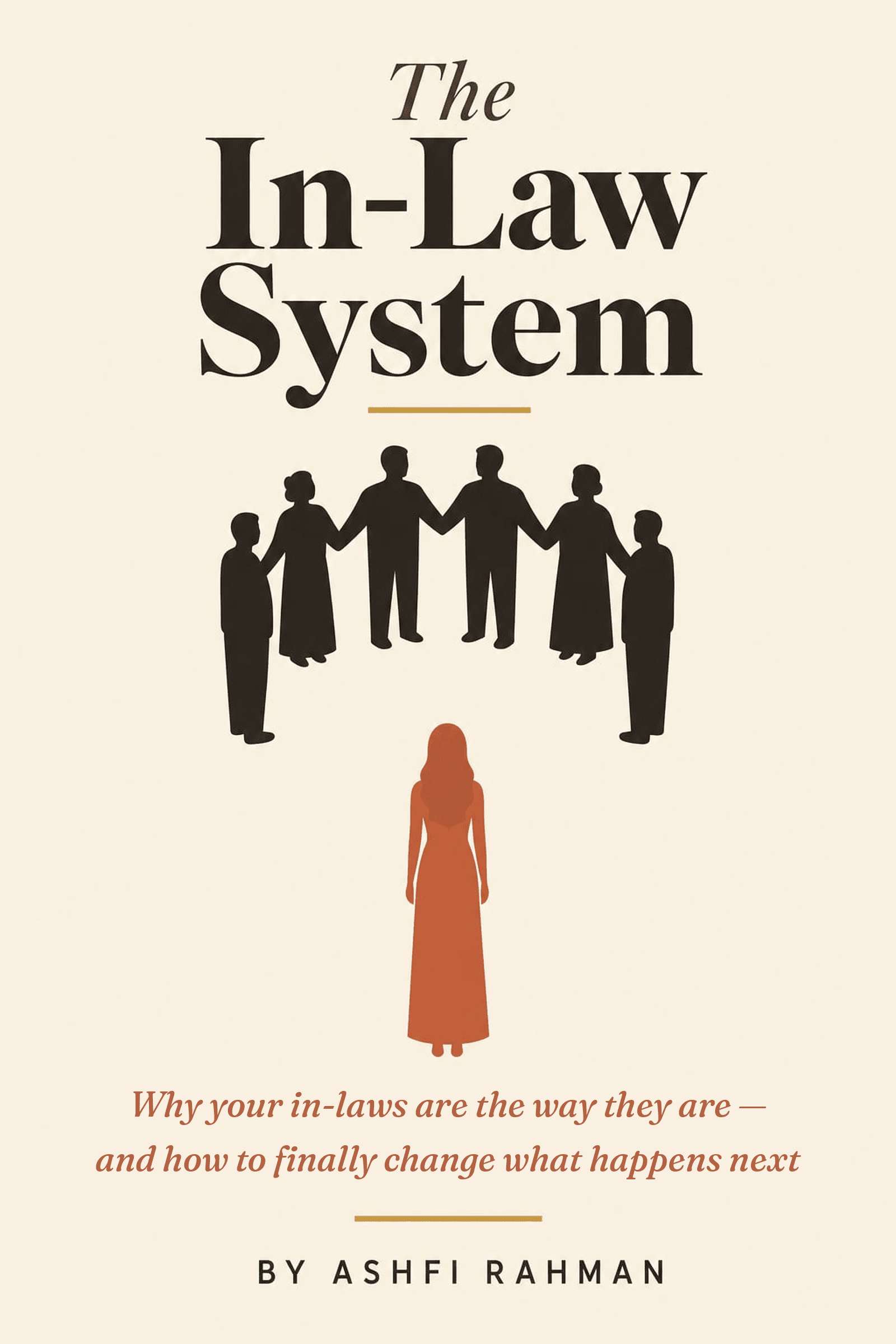
Get the ebook, $7.99
4.8 Read by 2200+ women in 25 countries
On Amazon, $9.99 on Kindle or the paperback. Here, $7.99 with 2 bonuses you won’t get there.
Pay with any card, from any country · Secure, encrypted checkout
7-day refund if it doesn’t fit your situation. See policy.
Everything you tried was aimed at their behaviour. But their behaviour was never what caused it. You weren’t doing it wrong. You were aiming one layer too high.
Almost every woman thinks she got the difficult in-laws. There’s an old rule under all of this, one nobody says out loud: you joined his family, so you’re the one expected to fit in. Just by arriving, you changed everyone’s place in that house, and what that sets off in her is fear of losing him and losing her place. Push the behaviour and you set off the fear, and it pushes back harder. That’s the wall you kept hitting. Even the one people call a narcissist is the same thing, just louder.
See what’s actually driving her and it stops feeling personal. That isn’t forgiving her. It’s armour, and it’s yours. The comments stop landing. The boundaries finally hold. Your husband finally sees it.
Not sure yet? Read the opening below. Five minutes, and you’ll know whether this is your house.
I lived this, then spent years finding out what actually causes it: history, psychology, and hundreds of women in houses nothing like mine. In my own, responding to the cause instead of the behaviour changed things quietly, without a single confrontation. — Ashfi
What changes once you can see what’s going on
Wherever you want this to go, the relationship better, less of it, or out of it entirely, and whether they live in your kitchen or an ocean away, here’s what changes. And peace at the end that doesn’t depend on her.
- Your own head
- The comment stops running at one in the morning. Once you can see why she does it, it stops being about you, and the hurt and the anger settle.
- Their behaviour
- It runs on habit, not choice, and on what your reactions feed it. Change what you feed it and it usually shifts, without a conversation. Not overnight, and not in every house.
- Your husband
- He finally sees it, without being asked to pick a side, because you show him how the family works instead of bringing him one more complaint.
- Your words
- You answer what's underneath a comment instead of the words on top. The comments often stop coming.
- Your boundaries
- Set quietly, where they actually land, so they hold instead of getting tested.
- Distance, if it comes to that
- You work out how much you actually want, a little or none, and take it by changing what you do rather than announcing it. No scene, no guilt, and usually nothing comes back at you.
- Your children
- What they learn from watching you. And if you keep contact, a grandmother they can enjoy without it costing them their mother.
Therapy drains the water. This shuts off the tap.
Not sure yet? Read the opening below. Five minutes, and you’ll know whether this is your house.
Free with the book: 2 bonuses you won’t get on Amazon
It’s an ebook. Most readers finish it in an evening or two. Just $7.99 here, or $9.99 on Amazon, and the paperback is there too.
If Your Wife Sent You This
He won't read a book? He doesn't have to. You don't explain anything: you just send him this letter, and it does the showing for you.
Your Situations
eighteen moments, and exactly what to say in each
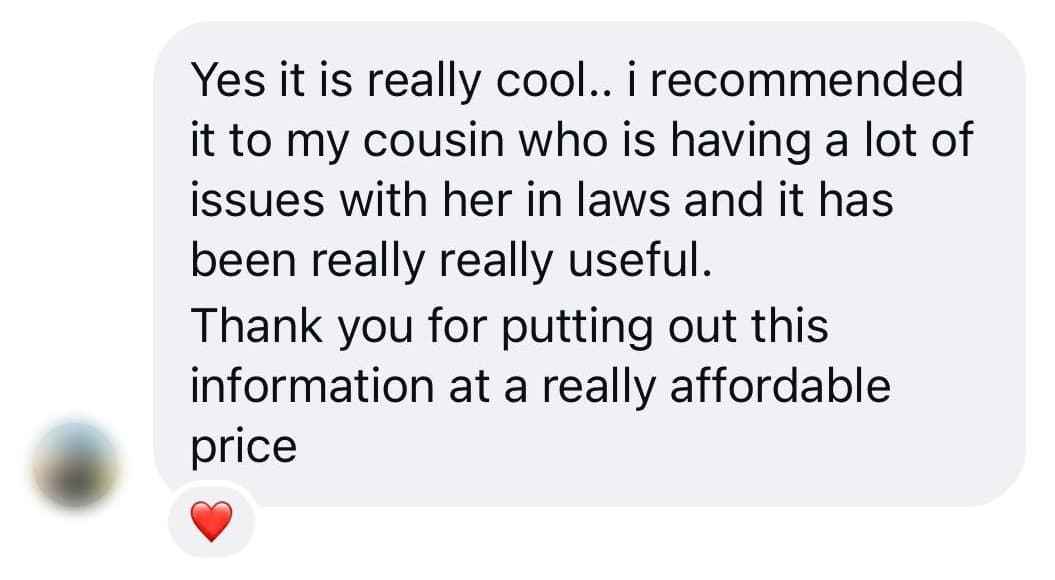
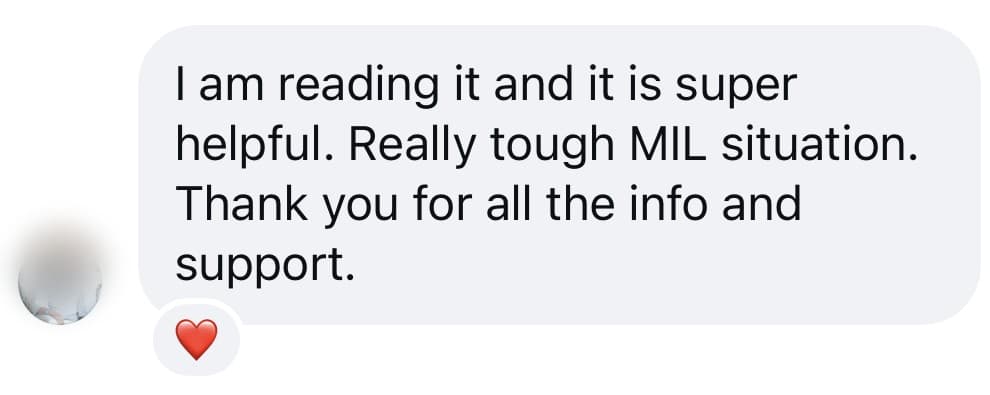
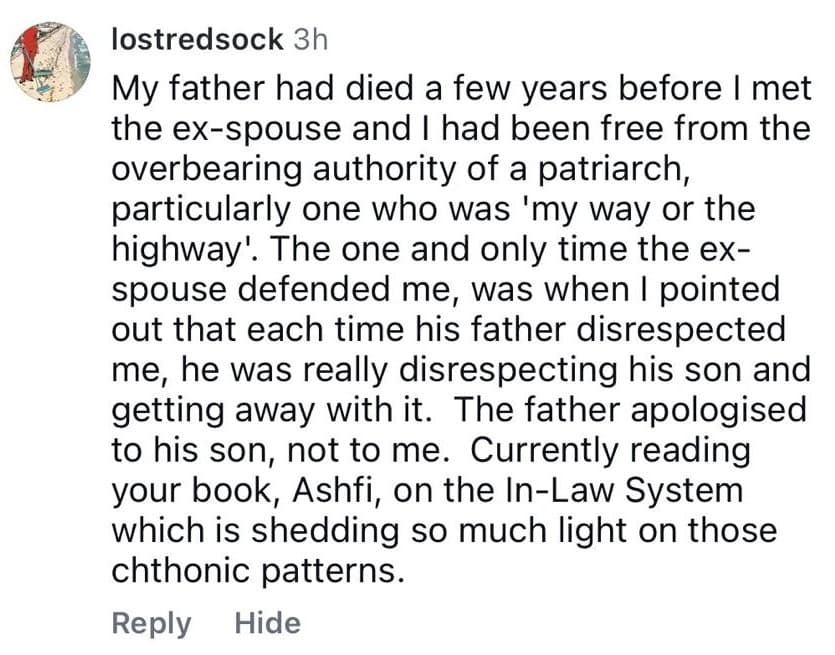
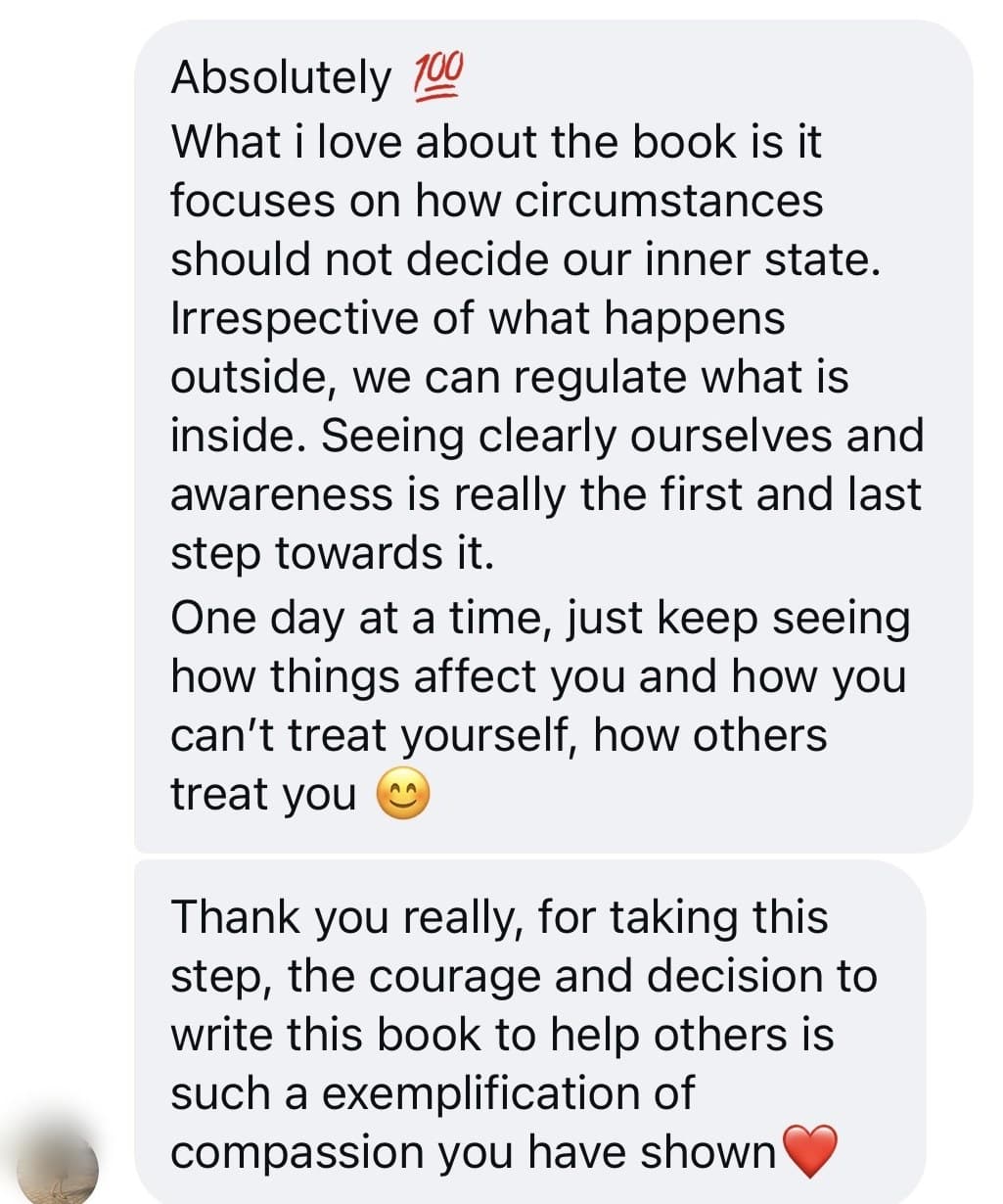
From my DMs




What's inside
2 parts, 17 chapters: the whole system taken apart, and what to do with it.
Part One — What Is Actually Happening
- 1What It Has Cost You
- 2Where the Rules Came From
- 3Why They Forgive Their Own and Never You
- 4When You Became the Threat
- 5Why They Cannot See What They're Doing
- 6Everyone Else in That House
- 7When Safety Comes Before Understanding
Part Two — What to Do About It
- 8Healing What This Took
- 9Getting Him on Your Side
- 10What Makes Them Treat You Better
- 11What to Say So It Stops
- 12Boundaries That Actually Hold
- 13When It's About Your Children
- 14How Much of Them Do You Want in Your Life?
- 15Making Them Understand
- 16Your Peace Does Not Depend on Them
- 17The Cycle Ends With You
Peace. Boundaries you hold because you can see clearly, not because you’re furious. And the stress finally dropping, which your body will notice before you do. I won’t promise your in-laws will change. Anyone who promises that is selling you something. What I can promise is the part that’s actually in your hands.
Get the ebook, $7.99
Pay with any card, from any country · Secure, encrypted checkout
7-day refund if it doesn’t fit your situation. See policy.
Nothing arrives at your door. See how private this is.
About me

I’m Ashfi. I’m a researcher and author now, and before that an engineer who left her career to build a personal care brand called HonestStory. Building it showed me how often the medical system treats symptoms and leaves the cause alone, and the more I read the doctors and authors who work at the root, the clearer it got: we handle our relationship problems exactly the same way.
Every kind of help works on the person in the room. Therapy works on you. Advice works on your reactions. But what drives the behaviour isn’t a person. It’s the way the whole family is set up, and nobody’s job is to look at that. Too small for the people who study societies, too big for the ones who study individuals.
So when the in-law problem arrived in my own life, I went after the cause. History, culture, economics, psychology, and hundreds of women in homes nothing like mine, until the pattern had no missing pieces.
In my house, responding to the cause changed things quietly, without a single confrontation, and the boundaries I hold now hold with peace on both sides. It won’t look the same in yours. But the same thing is running underneath, and what you do with it is yours. All of it is in this book.
Read the opening, free
If you’ve been wondering whether mine is the same, this is where you find out. The whole opening note is here: scroll inside the box to keep reading.
You know the moment: a comment at the dinner table, small enough that everyone laughs, sharp enough that only you feel it, and a husband who says she didn't mean it like that.
If you have opened this book, you are somewhere inside that moment, or the hundred versions of it that follow. For some of you it is comments and coldness. For others it is heavier — decisions made about your life without you, a husband who takes their side or goes quiet. The range in this book is wide, and most of it sits somewhere in the middle.
Some of you have already found the word narcissist, and are wondering whether this book is for milder problems than yours. It is not. Whatever the intensity, whatever the personality on top, and whether you live with them or see them twice a year, what is underneath is the same. Distance and personality change the volume. They do not change what is producing it — and there is an answer in this book for every version of it: for the woman who wants the relationship to get better, for the one who wants less of it, and for the one who wants out of it entirely.
And if you are early in this and still hoping they will become the family you were promised, keep reading: warmth is not impossible here, it simply has to be built rather than assumed — and you are the reader with the most to gain from knowing that now.
One thing before anything else. However bad it is right now, it is possible to come through this and live the rest of your life in peace. I know because I did, and I have watched it happen for the women I have worked with. But it only becomes possible when you stop asking what is wrong with her, or with you, and start asking what is running underneath both of you. That is what this book calls a system problem, and it is not forgiveness — it does not ask you to excuse anything or accept one more comment. Anything you do not understand controls you. Anything you understand, you can handle — and understanding is what makes every solution you have already tried start working. None of that advice was wrong. It was built on a wrong assumption about what you are dealing with, and I will show you which one later in this note.
If that still sounds like being asked to let it go, I understand. Your anger is not the problem; it is the right response to being hurt with no explanation, and I am not asking you to swallow it. I am asking something smaller. You have been meeting them as people who hurt you on purpose, because that is what anyone would do. Try holding them, just while you read this, as people sleepwalking through something they were handed. Not forgiven. Not excused. Just asleep.
No girl walks into her wedding expecting trouble from her in-laws. She knows she is a good person. People have always liked her. She has seen kind in-laws, and everyone told her in-laws are like family.
Then the wedding happens, and she is met with coldness, comments and small acts of control. And because everyone around her was raised on the same idea — that in-laws are family and family behaves like family — there is only one explanation available when they do not. I got difficult in-laws.
But ask ten married women in your own circle — friends, cousins, sisters — the ones a few years in, not the ones still in their initial years. Most of them have a story about their in-laws. The intensity varies with personality, education, culture and distance, but the pattern is the same in every house. And that should stop you, because there is no version of the world in which every one of those families is full of cruel people.
Something happens to people when they become in-laws, and it happens most on the husband's side. They step into a role, and the role comes with rules written thousands of years ago. When humans started farming, land became worth owning and passing on, so sons stayed and wives moved — and the woman became the one who joins another family, while her husband's mother became the one who runs the house she joins. No religion asked for any of this — the rules were written later, by men, and given a sacred name so that nobody would question them. It was an arrangement, and with time people started calling it family.
In most of the world nobody moves into anybody's house now. What survived is the direction — which family you are joining, and which one is doing the receiving. Some version of it still runs in every culture, even in the most modern homes, as a default nobody questions: whose name is taken, whose family the holidays lean toward, and who is quietly expected to adjust. And the same rules that put you in that position gave everyone in his family one too, which is where their behaviour comes from.
And if you are thinking family is family, rules or not — take the rules away and something is still there: two households that see each other because they want to, where nobody is owed a visit and nobody is counting them. What is not there is what the word promises, the automatic loyalty and the benefit of the doubt, because those come from blood relation or from years of shared history, and you arrived with neither.
Your position, put simply, is a new hire on probation. Nobody announced it, but almost every family runs it. You are watched — and the watching does not stop because it is friendly — small mistakes are remembered, and until you have proved yourself, everything you do is read as evidence. The difference is that a job tells you the probation exists and when it ends. A family never does. So you keep trying to earn a place without knowing what you are being tested on, and every failed test feels personal.
And it costs far more than the incidents themselves. The comment goes on running at one in the morning. The visit is rehearsed before it happens, so you arrive already tired. You stop trusting your own reading of a room, and after enough years there are things you used to say that you no longer say.
And your body stays on alert even between visits. Every time you brace, it releases the same stress chemistry it would for real danger — built to last a few minutes, and running in you for years. That is where the sleep that does not rest you comes from, and the stomach no doctor can explain. And it does not stop just because you cannot feel it happening.
None of which is a verdict on you, though it has felt like one for years. To see why, look at what those rules gave your mother-in-law: a son who was the most important relationship of her life, and a home where her way was the way things were done. Then you arrived, and both changed — not because you did anything, but because a marriage moves a man's life somewhere new. You did not have to live in her house for that to happen, and the reason she sees for it is you. So what you are meeting is not dislike but fear, of losing him and of losing her place. She can have it while sincerely believing a man's wife comes first, because a belief sits in the mind and this sits underneath it, firing whether or not the mind agrees. And everyone else in that house inherited a position too, which is why the coldness so rarely comes from one person alone.
And she cannot see what that fear does to you, for three reasons. Her rules do not call it cruelty; they call it guidance. She suffered worse as a daughter-in-law herself, so beside that, a comment at dinner is nothing. And her generation was never taught to name a feeling, so the fear has no route to words and comes out sideways, as a comment about the food. It is also why the double standard never lands when you point it out: from where she stands there are not two standards, there are two different women.
I know how much that sounds like an excuse, because from where you stand it looks like a choice — she is an adult, she knows what she is doing, and she manages to be perfectly pleasant to everybody else. That is the hardest thing in this book to accept, and it is the one thing you should not take on my word. There is a whole chapter on it, and by the end of it you will be able to watch it happening.
And nothing softens it. The forgiving we give a sister or a mother is exactly what you do not have with them yet — so the reaction arrives with no brakes on it. That is how a good person ends up acting cruel, without ever deciding to.
None of which makes it acceptable. What she does is wrong, and she is answerable for every word of it. Understanding is not for her benefit. It is for yours.
The kind in-laws you have heard about are not better people. A few genuinely are gentler, but most have the same fears — they simply learned somewhere, often from watching another family, that a daughter-in-law's goodwill is not automatic, and that a son and grandchildren can quietly go with it. What is running is the same in every house, and it only runs when something sets it off, which is why it can be changed. That is what the second half of this book teaches you to do.
At the other end are the in-laws people call narcissistic: the ones who lie, punish, play the victim, and never take responsibility. They are the same system with a personality on top; the threat fires the same way, and the personality decides how far she takes it. And if what you are living with is not difficulty but harm, safety comes before understanding, and there is a chapter on exactly that.
Your husband cannot see what you see, and there is a reason. That side of his mother did not exist until you arrived — nobody in that family had ever been a threat to her before. So when he says she didn't mean it, he is not choosing her over you; he is measuring your account against thirty years of evidence that she is not like that. That does not make it acceptable. It makes it changeable, and he has a chapter of his own.
Almost all the advice available to you, therapy included, starts from one assumption: in-laws should behave like family. Nobody examines it, because a therapist is not standing outside society either — she inherited the same word you did, and her job is to help you function inside the world as it is, not to question the rules that built it. For almost everything in your life that is right. It is only wrong here, because here the rule is the problem. So the difficulty arrives already labelled family conflict, a bond to be repaired, and nobody asks whether the word was ever true of this relationship.
And once it is labelled, only one explanation is left. If in-laws should behave like family and they do not, it must be a behaviour problem — hers, or yours — and every tool you are handed is aimed at behaviour. None of it asks why she does it, because the why is not inside her or inside you.
Nor was anybody trained to ask. Psychology studies one person and sociology studies whole societies, and this problem lives between them — inside one house, too small for one field and too big for the other. And even a therapist who sensed it could not hand it to you: said flatly in a session, in-laws are not built to feel like family sounds like a bleak opinion. It only becomes believable after the history, the biology and the psychology that make it true, and that takes a book, not an hour.
None of which is a reason to stop going. Therapy does a great deal this book cannot: it gives you a witness, someone who takes you seriously week after week, and works on what the years have done to you. If you are not sleeping, not eating, or cannot stop crying, you need it, and nothing here is a substitute. It is only a reason to bring the why with you.
So look at the five things you were told to do. Don't take it personally: you cannot, because nobody has given you a reason it isn't. Communicate calmly: you do, and she hears an accusation, because in her rules a daughter-in-law does not correct her. Get your husband on your side: what you describe arrives as an attack on his family, so he defends. Set boundaries: you state it clearly, exactly as you were taught — and a boundary stated is a boundary opened for discussion, so it gets argued with and folds. Limit contact: it lowers the volume, and what is underneath waits.
Every one of them protects you from her behaviour. Not one changes it.
Go back to the first one. Nobody can stop taking it personally on instruction — but understand that the coldness is the position speaking and not a verdict on you, and it stops being something you force. It becomes something you know, and the anger goes with it. That is what the why does: it turns advice you could not follow into things you no longer have to try.
Every tool changes the same way. You answer the fear a comment came from rather than the words on top, and it finds nothing to push against. You stop trying to convince your husband and let him see the system for himself — and once it is a system rather than his mother, there is nothing left for him to defend. You stop announcing boundaries and start living them, and a line nobody was invited to argue with is a line that holds. And if distance is still needed, you choose it with understanding and without attack, so there is no guilt on your side and no revenge on theirs.
All the advice you have been given quietly accepts that she will stay exactly as she is, and teaches you to live around her. This book does not. Their behaviour is not fixed and it is not a matter of character — it runs on what it receives from you, and when that changes, the behaviour changes, usually without anyone knowing anything has happened. Think of a tank: therapy drains the water, this book shuts off the tap. And none of it needs you to be angry, or brave, or anybody other than who you are on an ordinary Tuesday.
You may be wondering how I know this, when the people trained to know it don't say it. I am not a doctor or a therapist. I studied engineering, then left that career to co-found and build a research-based personal care brand called HonestStory, and that work taught me one thing that changed my health and my relationships permanently: most systems, medicine included, treat symptoms, because symptoms are what is visible. A skin problem gets a cream. The cream works until you stop, because nothing was done about what caused the skin to react. A problem that is only managed keeps coming back. Only a problem treated at its root goes away.
That habit did not stay in my work. The doctors and writers I read who work at the root rather than the symptom kept finding the same thing about the mind and about relationships — and philosophers were saying two thousand years ago that most bad behaviour is conditioning rather than character. What none of them could tell me is where any particular set of rules came from, or why the same trouble turns up in house after house.
The rest is not training. It is just how I am built. I am not cleverer than the women this happens to — everybody is built with something, and mine is that I notice things — the small shifts in a room, what a sentence is really doing, the patterns nobody had written down anywhere I could find. And understanding why human beings behave the way they do has been the thing I read about for pleasure most of my life — which happens to be exactly the right equipment for a problem like this one.
When my own in-law situation arrived, I started where everyone starts, by taking it personally. Then I began looking at it the way I look at everything else, and what I saw first was the biology: how humans treat their own, and how they treat outsiders. Once I could see it in my house I started seeing it everywhere — the same behaviours, in family after family, on almost the same schedule. So I read across history, culture, economics and psychology, and every method already being offered to women in this situation, and I listened to hundreds of women in strict homes and easy ones, in countries nothing like mine. What I found underneath all of it was one thing: relationships human beings invented behave nothing like the ones nature made, and the trouble is always in the gap between the two. Which was the same thing the doctors and writers had been saying about the body and the mind, arriving somewhere I never expected to find it.
Then I started responding at the root instead of the surface in my own family, and I told nobody what I was doing. The coldness reduced anyway. Not because anything was said, but because I had stopped doing the things that made me look like a threat, and they had stopped needing to defend against one. Most of the change in my house happened this way: quietly, from my side alone, without a single conversation. Not into a warm family — into an ordinary one, where the lines I hold now hold without a fight, and where nothing has to be managed any more. That was all I wanted, and it turned out to be more than I expected.
That is the part I most want you to hear, because you may have no one in your family you can explain this to, and you do not need one.
Much later, once things had already changed, I wrote this book and shared it with my sisters-in-law — and found a way to explain it to the older members that fit how they see things. Not as an argument about equality, which is what women usually try and what that generation will dispute forever, but as a fact about where the rules came from: something that asks nobody to admit they were wrong, and that, told in their own interest, can actually be heard. There is a chapter on how. But it is optional, and it comes last. The work that matters is the work you do on your own understanding, and that needs nobody's permission.
Whatever your situation is, your side of it can change — and that is the part you control. Their side usually follows. When it does not, the last chapter shows you how to be at peace anyway, because your peace was never meant to depend on them. And if you have already stepped back, or ended it altogether, this is still for you: the peace was never in the contact. It was in the explanation.
You can keep managing this for the next thirty years, or you can understand it once. The rest of this book is the second option.
That’s the end of the opening note. The 17 chapters that follow take the system apart and show you what to do with it.
Get the ebook, $7.99
Pay with any card, from any country · Secure, encrypted checkout
7-day refund if it doesn’t fit your situation. See policy.
What readers say
“This book gave me a perspective I'd never come across before. It doesn't tell you to blindly tolerate people or cut everyone off. It helped me understand what was really driving the behaviour, and that made it much easier to respond calmly instead of reacting emotionally. I finished it feeling lighter and with far more clarity than I expected.”
I kept thinking- Finally, someone gets it. I wasn't looking for another book telling me to stay calm or set stronger boundaries. I'd already done all of that. This helped me understand what was happening underneath everyone's behavior, including my own. I actually felt less angry after reading it, which I honestly wasn't expecting. If you're exhausted from trying everything, read this.
The book made me realize that most of my energy was being spent trying to figure out who was wrong. Once I stopped obsessing over that, everything got easier. Not easy... just easier 😅 The idea that good people can still create painful situations was probably my biggest takeaway. Wish there were more examples, but overall very insightful.
I've been in therapy for almost a year, and it's helped me process the emotional side of everything. This book complemented that in a completely different way—it helped me understand the patterns and dynamics behind what I'd experienced with my in-laws. Together, therapy and this book have helped me move forward in ways I honestly didn't expect. Highly recommend. ❤️
As a husband, this was uncomfortable to read in the best way. The section about men trying to keep peace between wife and mother felt painfully accurate. I finally understood why my "middle path" was exhausting both women instead of helping.
The communication section was 🔥 I used to either stay quiet and resentful or speak up and then regret it because everything would blow up. The idea of responding to the fear underneath people's behaviour instead of arguing with the behaviour itself completely changed how I handle conversations with my MIL. It's not magic. My family didn't suddenly become perfect 😂 But I feel much more in control now.
Read more reviewsShow fewer reviews+
This changed the way I look at difficult people. I still don't agree with how my in-laws behave, but I don't take every comment as a personal attack anymore. That one shift has brought me so much peace.
I always believed there were only two options- either tolerate everything or completely cut ties. This book showed me there are healthier ways to create distance without guilt or constant conflict. That perspective alone was worth reading.
Bought it for my wife... ended up reading the whole thing myself. The chapter about husbands was surprisingly balanced. It didn't make me feel blamed, but it definitely made me reflect on how often I stayed silent because I thought I was "keeping the peace." We've been communicating much better since reading it together.
Everywhere you hear - set boundaries. But no one tells you why they sometimes make things worse and how to set one without drama. This book finally made sense of that. I changed the way I approached just one situation, and it worked without becoming another family drama. Wish I'd read this years ago!
I loved that this book doesn't just hand you a list of perfect responses. It explains what's actually happening underneath those conversations. I tried one of the approaches with my mother-in-law last weekend, expecting another argument... and it simply didn't happen. 😅 I was honestly shocked.
I was skeptical because the description sounded almost too different from everything else I'd tried. But after reading it, I finally understood why therapy, boundaries, and even taking space only seemed to help temporarily. The writing is easy to follow, but the ideas stay with you long after you finish. I don't usually leave reviews, but this one deserved it.
This isn't a quick-fix relationship book, and I mean that in the best way. It challenged the way I'd been thinking for years. There were several moments where I literally stopped reading just to process what I'd learned.
I bought this because I was having constant tension with my husband's family. What surprised me was that it never painted anyone as the villain. It helped me see the bigger picture without making excuses for hurtful behavior. I came away feeling more confident, less reactive, and finally like I had a direction instead of just coping. Worth every dollar.
I've read so many books about boundaries and difficult family relationships that I almost skipped this one. I'm glad I didn't. What stood out was that it didn't just tell me what to do—it explained why nothing I'd already tried seemed to last. That one shift completely changed how I looked at my relationship with my mother-in-law. I finished it in one evening and immediately started rereading parts I'd highlighted.
What made this feel different from other relationship books is that it goes beneath advice. It explains the history, biology, conditioning, and family roles all together. I finally understood why the same patterns repeat across generations.
I highlighted half the book 😅 The part about tying your self-worth to your in-laws' approval hit really hard. I didn't realize how much of my pain was coming from needing their validation.
For me the payoff was simple: less mental noise. I stopped replaying conversations for hours and trying to decode every comment. The stress didn't disappear overnight, but it dropped a lot once I understood the system instead of treating every interaction like a personal attack.
I read this at 1am after crying over a comment my MIL made. By the end I felt less trapped inside my own head. Not "fixed," just... clearer. And honestly that clarity was a huge relief ❤️
The chapter about benchmark distortion honestly shocked me. I had never considered that my MIL and I were measuring the same situation against completely different life experiences. That one idea changed how I interpret her reactions.
I tried one of the communication examples from the book during a conversation with my MIL. Instead of defending myself, I responded to the feeling underneath her comment. It didn't magically solve everything, but the conversation stayed calm for the first time in months.
The biggest relief for me was finally stopping the constant "is it me?" spiral. I still have disagreements with my in-laws, but I don't walk away feeling like my entire personality is defective anymore 😭
Made me realise I was carrying way too much guilt that wasn't mine.
This book answered questions I didn't even know how to ask.
The communication part was gold. Less fighting, more understanding.
Read it at 2am after a bad day. Felt less alone afterwards ❤️
Not a self-help book. More like a "finally I understand what's going on" book.
I stopped reading twice because I kept thinking "wait... that's exactly what's happening in my family."
For the first time I understood WHY the same situation looked completely different to me and my MIL. Mind blown
I wish someone had given me this book when I got married. Would have saved me soooo much overthinking
The biggest surprise was that the author doesn't tell you who to blame. I thought that would be frustrating. It wasn't. It was actually freeing ❤️
This book gave me something I haven't had in years... certainty. Not certainty that I'm right. Just certainty that I'm not crazy 😭
I bought it for advice. I ended up getting clarity. The section on understanding the fear underneath people's behaviour changed how I communicate with my in-laws completely. Less defending, less fighting, more understanding.
The biggest gift this book gave me was permission to stop asking "What's wrong with me?" every day. I didn't realise how exhausted I was from constantly second-guessing myself ❤️
I kept searching YouTube for answers and everyone was saying the same thing: boundaries, boundaries, boundaries. But nobody explained WHY some comments hurt so much, WHY I kept doubting myself afterwards, or WHY every conversation seemed to turn into a misunderstanding 😭 This book connected so many dots for me. I actually feel calmer now because I understand what's happening.
My therapist helped me understand my feelings. This book helped me understand the situation. That was the missing piece for me. For years I was stuck between "they're horrible people" and "maybe I'm the problem." The book showed me there was a third possibility: that there are forces at play which neither side fully understands. Very few people are talking about this.
not gonna lie, I cried a little 😅. The part about constantly questioning your own reality hit hard. I didn't realise how much energy I was spending wondering if I was the problem. I feel lighter after reading it.
Read it in one evening. The phrase that stayed with me was basically: "good people can still hurt each other." Never thought about family conflict that way before. Very eye opening.
I bought this expecting another "toxic in-laws" book. It's not. What surprised me is that the author doesn't make anyone the villain. Instead of telling me who was right and who was wrong, the book helped me understand why everyone feels hurt and misunderstood. There was one chapter where I literally had to put the book down because I suddenly understood why my mother-in-law reacts the way she does. Do I agree with all her behaviour? No. But for the first time I understand it. And weirdly that reduced my stress more than any advice I've received before ❤️
I have read sooo many articles and watched countless videos on in-laws. Most of them basically say "set boundaries" and move on. This was the first thing that actually explained WHY these problems happen in the first place. The biggest relief for me was realizing I'm not crazy 😭. For years I kept asking myself, Is it me? Am I too sensitive?. This book didn't tell me I'm perfect, but it helped me stop blaming myself for everything. Honestly that alone was worth the price.
I didn't realize how much mental space this issue was taking up until I read this. Every day I was replaying conversations, second-guessing myself, wondering what I should have said differently. After reading the book, I feel lighter. Not because my in-laws changed, but because I finally understand what's happening and stopped carrying all the blame. Honestly, I slept better the week after reading it ❤️
The biggest thing this book gave me was a different way to communicate. I used to either stay quiet or explode. There was no middle ground 😅 The way the author explains what's happening underneath people's words completely changed how I approach difficult conversations. My situation hasn't magically changed, but the fights have reduced.
I bought this because I wanted to know how to deal with my in-laws. What I didn't expect was the relief. For years I kept asking myself- Am I being too sensitive?, Am I the problem? This book didn't tell me I was right about everything, but it helped me stop blaming myself for everything. That alone was worth the price.
Leave a review
Honest reviews only, please.
Questions
Will this apply to my family, culture, or stage?+
Yes. It's written for women everywhere: any culture, any country, whether you live with your in-laws or an ocean away, and whether you're two months in and just noticing the first signs, or ten years deep. The surface details shift from home to home, but the forces underneath don't. Fear, conditioning, power, the patterns families hand down: these drive in-law relationships everywhere. Your details may look different; the system driving the behaviour is the same one you'll recognise.
If it's really one system, why hasn't anyone explained it before?+
Because every kind of help is built to work on the person in the room. A therapist works on you; advice works on your reactions. Nobody's training or job is to analyse the family structure around you. It sits between psychology and sociology, in everyone's blind spot. I wasn't anyone's expert, so I had no room to stay inside. I just followed the cause until the pattern had no missing pieces.
I'm not in the US. Can I still pay in dollars?+
Yes: the $7.99 price works from any country. When you check out, a secure payment window from Dodo Payments opens right on the page. You can pay with any debit or credit card (Visa, Mastercard, and more), plus Apple Pay or Google Pay. No US card or US address needed. You'll actually be charged the local-currency equivalent of $7.99, nothing more, and your download appears the moment you're done.
Where does therapy fit in?+
I respect it deeply, and many readers use both. Therapy works on the behaviour and on you: your patterns, how you cope. This book works one layer beneath that, on the root cause driving their behaviour. And when you reach the cause, everything else finally starts working: your healing, your words, your boundaries, because now they're aimed at the right thing. Different layers, both useful, and they sit well side by side.
What if she never changes?+
Then the book still works. Its later chapters are built for exactly that: healing that's yours whatever they do, boundaries and distance without guilt, and peace that doesn't depend on her changing. That part is entirely in your hands, and it never needed her cooperation.
Does this apply if my mother-in-law is narcissistic or genuinely toxic?+
Yes, with one honest caveat. Even the harshest in-laws are running on conditioning; theirs simply has a harder, more personal layer on top of the system's. That doesn't excuse anything, but it does change what works, and the book goes there: how to hold a boundary when someone pushes back harder instead of backing down, when to step back to low or no contact, quietly and without the guilt that usually follows, and how to be at peace even if she never changes. One honest limit: if there's violence, threats, or you don't feel physically safe, that's different from a difficult family, and no book should be your main answer. The book has a chapter on telling ordinary conditioning apart from genuine harm, so you never over-empathise with someone who is actually dangerous, and it points you toward getting real support.
What are the free bonuses?+
Buy here (not on Amazon) and two companion pieces come with your book, delivered as PDFs in the same email. If Your Wife Sent You This: written for your husband, so you don't have to do the explaining. It tells him why he genuinely hasn't seen what you're describing, and what you're actually asking him for, without asking him to take a side against his mother. Your Situations: eighteen of the moments women write in about most, and the exact sentence for each: the comparison, the drop-in visit, the shared kitchen, the group chat, what they post about your children, and more. Small enough to keep on your phone and open in the moment. Both are yours to keep, alongside the book.
Ebook or paperback?+
This page sells the ebook: $7.99, delivered instantly by email, yours to keep and re-read, and it comes with 2 free bonuses you won’t get anywhere else. Prefer to hold a physical copy or gift one? The paperback is on Amazon in the US, UK, Canada, Australia, Japan and much of Europe. Same book, but the bonuses come only with the ebook here.
Can I gift it to someone?+
Yes, three ways. Buy it here and forward the email with the book and bonuses to her (it's yours to share with one person you love). Or gift it through Amazon Kindle's gifting option if you'd rather it arrive from Amazon. Or, if you'd rather give something she can hold, the paperback is on Amazon in most countries. And if it's your sister, your friend, or your daughter-in-law, this is exactly the book to arrive before the years pile up.
Can I buy and read this privately?+
Yes, and it matters to more readers than you'd think. Nothing I send you is posted, so there's no package and nothing arrives at your door. Your bank statement won't show the book's name: it shows the payment company, or the name of this shop, the way any small online purchase does. The email it arrives in is titled "Your order from Ashfi", so the book isn't named there either. It opens on your phone like an ordinary document, with no app to install and nothing on your home screen. One thing does carry the title, and I'd rather tell you than let you find out: the file itself. If that matters, save it somewhere of your own and rename it to anything you like. And nothing about your purchase is shared with anyone, ever.
Not ready for the book yet?
Take the two-minute quiz and see what kind of house you married into.